
Joint Replacement
Ankle Replacement – How the Surgery Works
The ankle joint connects the shin and calf bones to the talus and carries your full body weight with every step. When cartilage has been largely worn away by osteoarthritis or after an injury, bone rubs against bone – and every movement hurts.
An ankle prosthesis replaces the worn joint surfaces while – unlike fusion – preserving the joint's mobility. It consists of a tibial and a talar component made of metal, with a mobile polyethylene bearing in between.
Which prosthesis is right?
Motion-preserving ankle prosthesis
A three-part design with a mobile bearing that replicates the joint's natural rolling-gliding motion – the design most commonly used today.
Prosthesis with bone augmentation
For larger bone defects, the implant is anchored with additional augmentation components.
Revision prosthesis
Replacement of a loosened or worn ankle prosthesis, with bone augmentation if needed.
How the surgery works
Planning
X-rays and axis measurement determine the correct prosthesis size and position.
Anaesthesia
The surgery is performed under spinal or general anaesthesia, often supplemented with a nerve block for pain relief.
Gentle access
The joint is exposed through an incision at the front of the ankle.
Preparing the worn joint
The worn surfaces of the shin bone and talus are precisely shaped to fit the implant.
Inserting the components
The tibial and talar components are anchored, and the mobile bearing is inserted between them.
Checking mobility
Ligament tension and range of motion are checked and finely adjusted before the wound is closed.
After the surgery
For the first few weeks, aftercare takes place in a special surgical shoe with gradually increasing weight-bearing. Physiotherapy then rebuilds mobility and strength in a targeted way.
More about physiotherapy →Your specialists for the Ankle
 Dr. Peter MarkSpecialist in Orthopaedics, RheumatologyFocus: Foot · Hip · KneeLearn more →
 Dr. Gunnar SaxSpecialist in Orthopaedics and Trauma SurgeryFocus: Foot · Hip · KneeLearn more →
 Dr. Dirk LacknerSpecialist in Orthopaedics and Trauma SurgeryFocus: Foot · ShoulderLearn more →
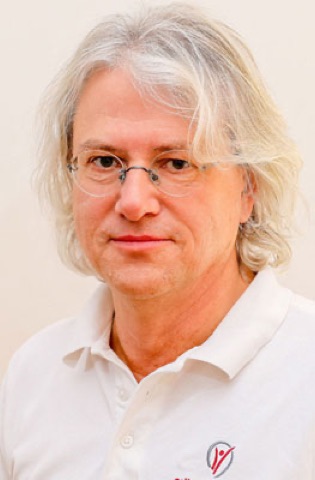 Dipl. med. Wilm HeckerSpecialist in Orthopaedics and Trauma SurgeryFocus: Foot · Hip · KneeLearn more →
 Dr. Sefer FidanSpecialist in Orthopaedics and Trauma SurgeryFocus: Foot · Hip · KneeLearn more →
This overview does not replace a consultation with a doctor. Which procedure is right for you is something you decide together with your doctor during your appointment.