
Joint Replacement
Knee Replacement – How the Surgery Works
The knee joint is formed by the thigh bone, shin bone and kneecap. In advanced knee osteoarthritis (gonarthrosis), the protective cartilage has worn away and the joint surfaces rub painfully against each other.
A knee prosthesis is a surface replacement: only the worn cartilage layer is removed and replaced with thin, precisely fitted metal and plastic components. Most of your own bone and ligaments are preserved.
Which prosthesis is right?
Unicondylar (partial) knee replacement
If only one half of the joint is damaged, only that half is replaced. The procedure is usually minimally invasive and spares ligaments and muscles – rehab is correspondingly shorter.
Total surface replacement
If the entire joint is worn, the gliding surfaces of the thigh and shin bones are replaced, along with the back of the kneecap if needed. The ligaments are preserved.
Constrained prosthesis
For pronounced instability, ligament damage or revision surgery, a coupled prosthesis provides additional guidance.
How the surgery works
Planning
X-rays and measurement of the leg axis determine the exact position of the prosthesis.
Anaesthesia
The surgery is performed under spinal or general anaesthesia.
Access
Through an incision at the front of the knee, the joint capsule is opened and the kneecap moved to the side.
Renewing the gliding surfaces
Precise cutting guides remove only the worn surface – matched to the prosthesis to the millimetre.
Ligament balancing
The collateral ligaments are carefully balanced so the new joint moves evenly through its full range of motion.
Fixing and checking
After a trial with test components, the parts are firmly fixed with bone cement. The cement hardens within minutes and can bear weight immediately.
After the surgery
Mobilisation begins on the day of surgery. Physiotherapy and, where useful, a motion splint bring the knee back into shape step by step. Rehab follows on an outpatient or inpatient basis.
More about physiotherapy →Your specialists for the Knee
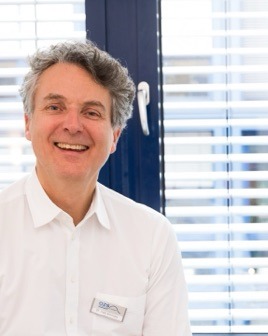 Dr. Hein KleihuesSpecialist in Orthopaedics and Trauma Surgery, RheumatologyFocus: Knee · Hip · FootLearn more →
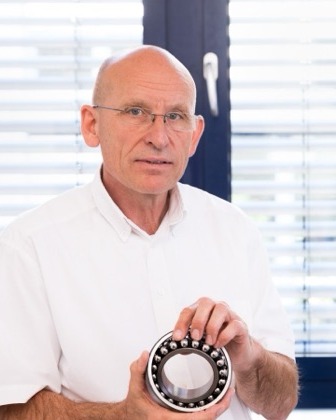 Dr. Peter MarkSpecialist in Orthopaedics, RheumatologyFocus: Knee · Hip · FootLearn more →
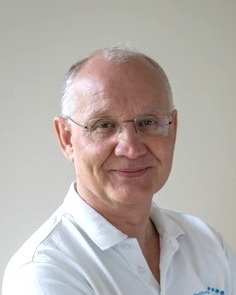 Dr. Gunnar SaxSpecialist in Orthopaedics and Trauma SurgeryFocus: Knee · Hip · FootLearn more →
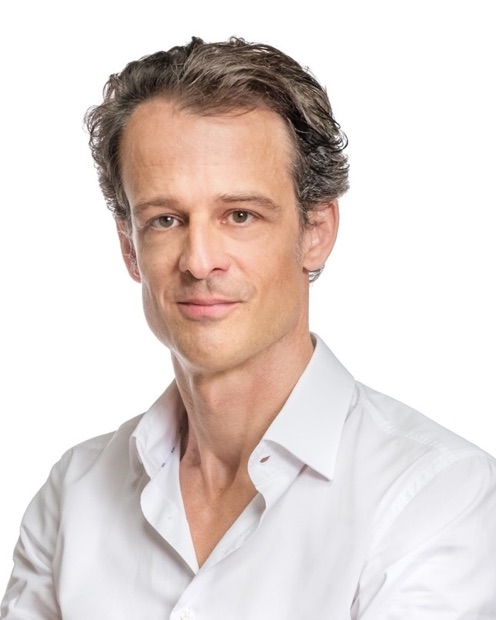 Prof. Dr. Hanno SteckelSpecialist in Orthopaedics and Trauma Surgery, Special Orthopaedic SurgeryFocus: Knee · HipLearn more →
This overview does not replace a consultation with a doctor. Which procedure is right for you is something you decide together with your doctor during your appointment.